
Termite Inspections and Treatment
Eastern subterranean termites live in the soil across Northeast Ohio and work their way into houses through the foundation. We inspect homes for buyers and sellers and for owners who have seen swarmers or mud tubes, and we treat with a liquid barrier or bait stations.
Termite or Carpenter Ant?
Every spring we get calls about "flying ants" that turn out to be termites, and the other way around. Both swarm at the same time of year, and both can come out indoors. Here is how to tell them apart with a close look or a photo.
| Feature | Termite Swarmer | Carpenter Ant Swarmer |
|---|---|---|
| Antennae | Straight and beaded | Bent at an elbow |
| Waist | Thick, no pinch between body sections | Narrow and pinched |
| Wings | Four wings of the same length, much longer than the body; they break off easily | Front wings longer than the back wings |
| Color | Dark brown to black body, pale or smoky wings | Black, or black and dark red |
| What the wood looks like | Tunnels packed with mud and soil; the wood looks layered and dirty | Smooth, clean galleries; sawdust-like frass pushed out of the wood |
| When you see them indoors | March to June, often on a warm day after rain | Spring, or any time of year if the nest is inside the house |
Spring Swarmer Inspection Checklist
Between March and June, walk through the house and the basement once a month and look for:
- Winged insects, or little piles of shed wings, on window sills, in the basement or near doors
- Pencil-wide mud tubes on foundation walls, piers, the sill plate or the inside of a block wall
- Wood that sounds hollow or dents easily: sills, joists, baseboards, door frames
- Bubbling or rippled paint, or tiny holes in drywall
- Wood touching soil: porch steps, deck posts, fence boards against the house, firewood
- Moisture at the foundation: leaks, downspouts that empty against the wall, a damp crawlspace
- Foam insulation board below ground level, where termites can tunnel out of sight
If you find tubes, leave them in place for us to see. Breaking one open and checking a few days later shows whether it has been rebuilt, which means the colony is active.
Treatment Options Compared
There are two proven ways to treat subterranean termites. Both work; which one fits depends on the house, the access around the foundation and how fast the protection is needed. We explain both and recommend one, without selling you the other as well.
| Factor | Liquid Barrier | Bait Stations |
|---|---|---|
| How it works | A termiticide is applied to the soil along and under the foundation, so termites coming up from the soil pass through treated ground | Stations set in the soil around the house; termites feed on the bait and carry it back, which brings the colony down |
| How fast | Protection as soon as the treatment is complete | Slower: termites first have to find the stations, then the colony declines over weeks to months |
| What it takes | Trenching along the foundation, and drilling through concrete at porches, patios, steps and garage slabs | Little disturbance: stations every few feet in the soil around the house |
| After the work | Periodic inspections to make sure nothing has bridged the treated soil | Stations must be checked and the bait replaced on a schedule |
| Best for | Active infestations that need fast protection, with good access around the foundation | Houses where drilling is a problem, or owners who want ongoing monitoring |
Termite Inspections for Buying or Selling a Home
A lot of our termite work starts with a home sale. Buyers want to know what they are getting, sellers want no surprises at closing, and lenders or agents often ask for a termite inspection as part of the deal. We look at every accessible part of the house where termites would show: the basement or crawlspace, the foundation inside and out, the sill plate, the garage, porches and steps, and the wood that touches soil.
You get a plain answer: live activity or not, signs of old damage or treatment, and the conditions that invite termites, such as moisture and wood-to-soil contact. If we find active termites, we explain the treatment options and timing so the sale can stay on schedule. Tell us the closing date when you call, so we can book the inspection in time.
What Termite Damage Looks Like
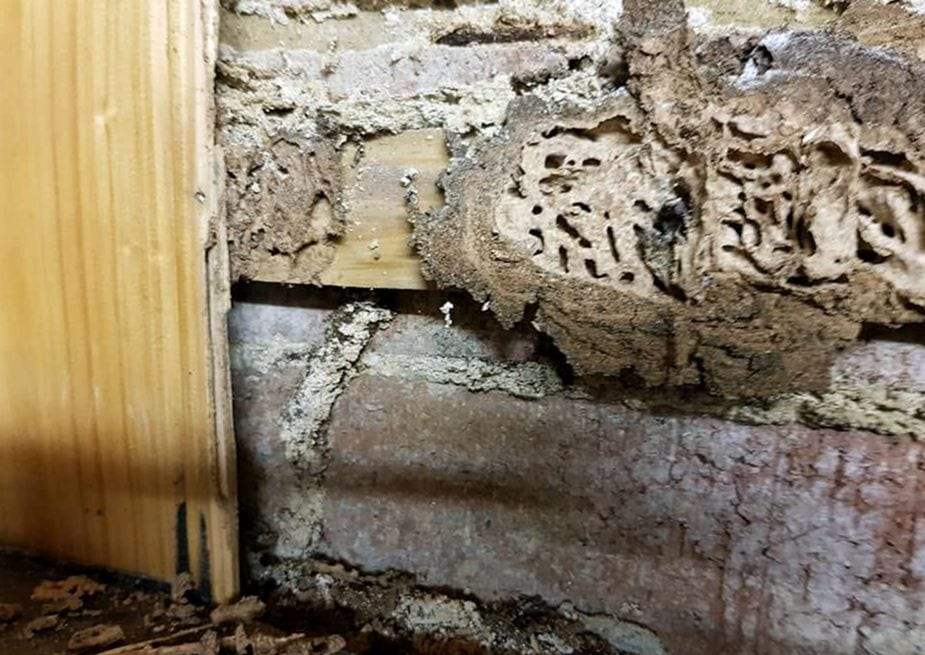
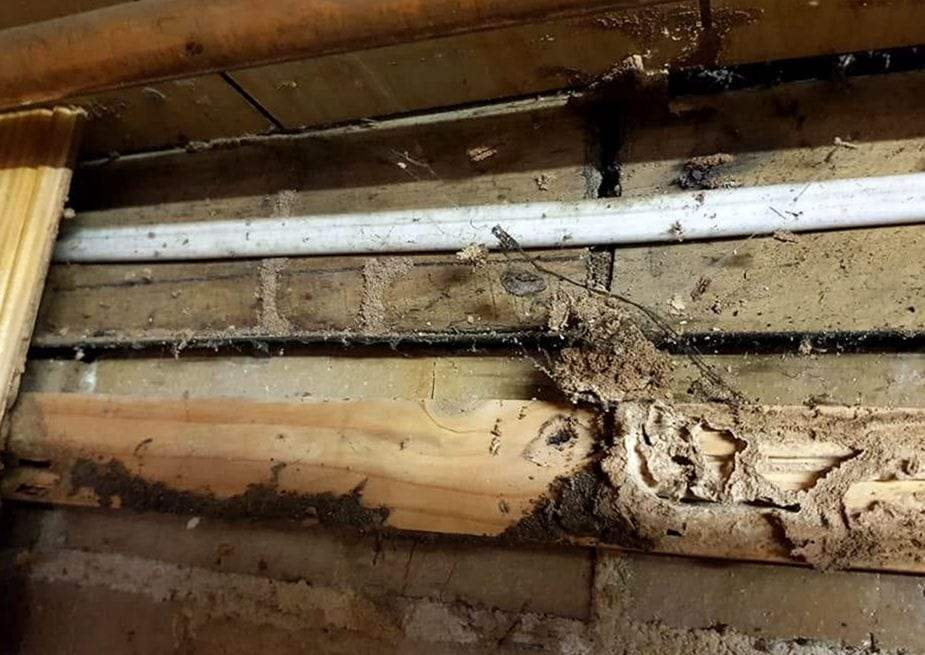
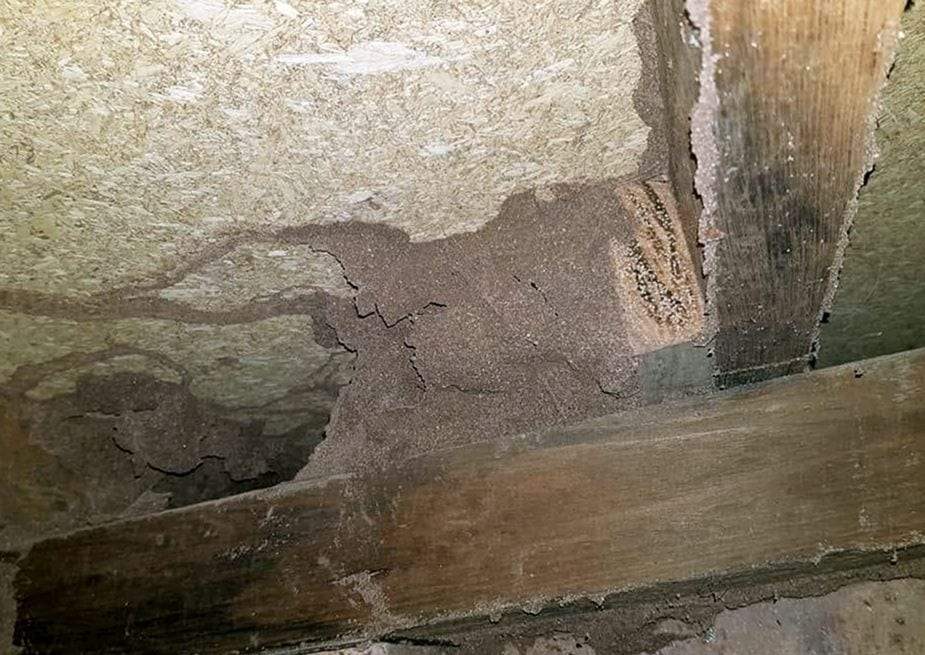
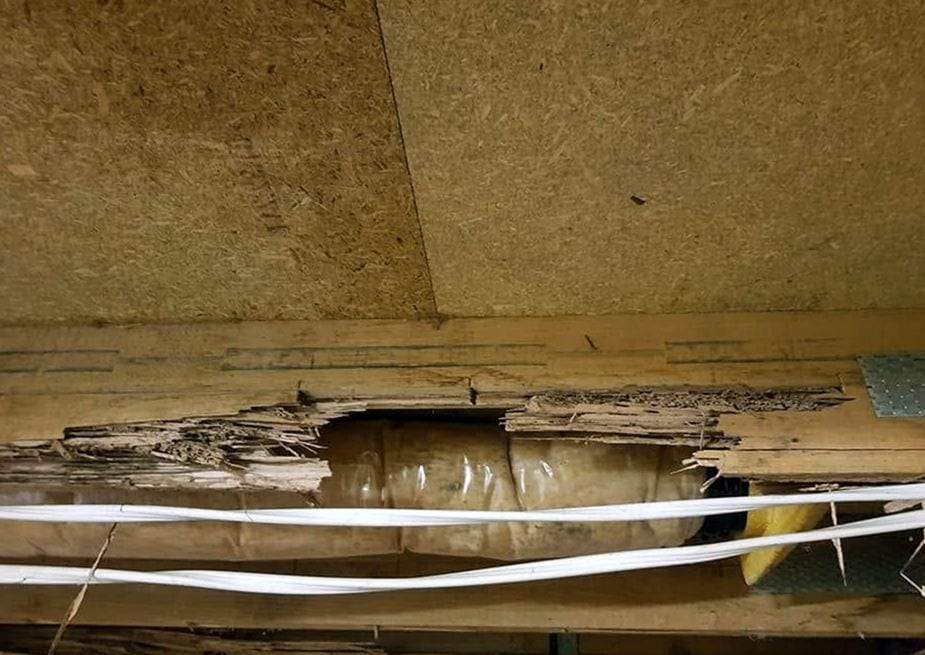
Photos from termite inspections: mud tubes on the foundation, soil packed into the wood and framing eaten away under a floor.
Termite Questions
When is termite swarm season in Northeast Ohio?
Mostly March through June, usually on a warm, calm day after rain. A few colonies also swarm in September or October. Swarmers indoors mean a colony is nearby and may already be in the structure, especially if they come out of a wall, a baseboard or the basement floor. Swarmers do not bite or sting and die within a day or so; the colony is what matters.
Does a damp basement or crawlspace make termites more likely?
Yes. Subterranean termites dry out easily, so they look for moist soil and moist wood. Downspouts that empty against the foundation, leaky plumbing, a crawlspace without airflow and wood that touches the soil all make a house easier to get into. Moisture is one of the first things we check, and fixing it is part of the protection.
Can termites get through a block or poured foundation?
They do not chew through concrete, but they find a way around it: cracks, the hollow cores of concrete block, gaps around pipes, expansion joints and the soil under porches and steps. Inside a block wall they can travel unseen up to the sill plate. That is why the inspection covers the foundation inside and out, the sill and the areas behind stored boxes.
The inspection found old damage. Do I still need treatment?
Not always. Old damage with no live termites, no fresh mud tubes and a record of past treatment may only need monitoring. Active termites need treatment. The inspection tells you which one you have, and we will tell you plainly.
Seen swarmers or mud tubes?
Save a few swarmers in a sealed bag, leave the mud tubes in place and call us to book an inspection.